Liner protrusion is critical for proper head gasket crush — get the configuration right and your rebuild lasts; get it wrong and you risk early failure.
When rebuilding a diesel engine—whether it’s a Caterpillar, Cummins, Detroit, or another heavy-duty powerplant—one seemingly small detail can make the difference between a reliable, long-lasting overhaul and repeated head gasket failures, coolant-oil mixing, or even catastrophic engine damage. That detail? Whether your engine uses flush or protruding cylinder liners.
At FP Smith Parts, we supply complete engine rebuild kits tailored to real-world applications. Understanding liner type isn’t just technical trivia—it’s essential for selecting the right kit, avoiding installation headaches, and ensuring your rebuild delivers maximum uptime and durability.
What Are Cylinder Liners, and Why Do They Come in Different Styles?
Cylinder liners (or sleeves) are replaceable inserts that form the walls of the combustion chamber in many diesel engines, especially wet-sleeve designs common in heavy equipment, trucks, and industrial applications. They allow for easier rebuilding without machining the entire block and provide a fresh, precision surface for piston rings.
The two primary configurations relevant to rebuild kits are:
- Protruding Liners (also called raised or flanged with protrusion): These sit slightly above the engine block deck surface (typically 0.001″ to 0.006″ or more, depending on the engine spec, measured in multiple spots around each cylinder). This protrusion creates the necessary “crush” on the head gasket’s fire ring when the cylinder head is torqued down.
- Flush Liners (or near-flush/dry-style in some contexts): These sit level with or very close to the block deck. They rely more on the block itself or different sealing methods, with less emphasis on protrusion for gasket compression. Dry liners are often pressed in and may appear flush, while some wet liners can be installed flush with shims or specific machining.
The distinction affects everything from gasket compatibility to counterbore machining, shims, and overall engine geometry.
Why Liner Protrusion (or Lack Thereof) Is Critical for Sealing and Longevity
The primary job of liner protrusion is to ensure uniform crush on the cylinder head gasket, particularly the fire ring that seals combustion pressures. Proper protrusion:
- Maintains alignment between head, gasket, and block.
- Prevents leaks of combustion gases, coolant, or oil.
- Distributes clamping forces evenly to avoid distortion.
Consequences of getting it wrong (too low, too high, or inconsistent across cylinders):
- Blown head gaskets: Insufficient protrusion fails to crush the gasket adequately, leading to leaks shortly after rebuild. Many builders aim slightly above OEM minimum for longevity.
- Cracked liner flanges, damaged pistons, or warped heads: Excessive or uneven protrusion creates stress points.
- Coolant-oil contamination, loss of compression, blow-by, and reduced power/efficiency.
- Premature failure and costly downtime: A mismatched rebuild often requires pulling the head (or engine) again soon after.
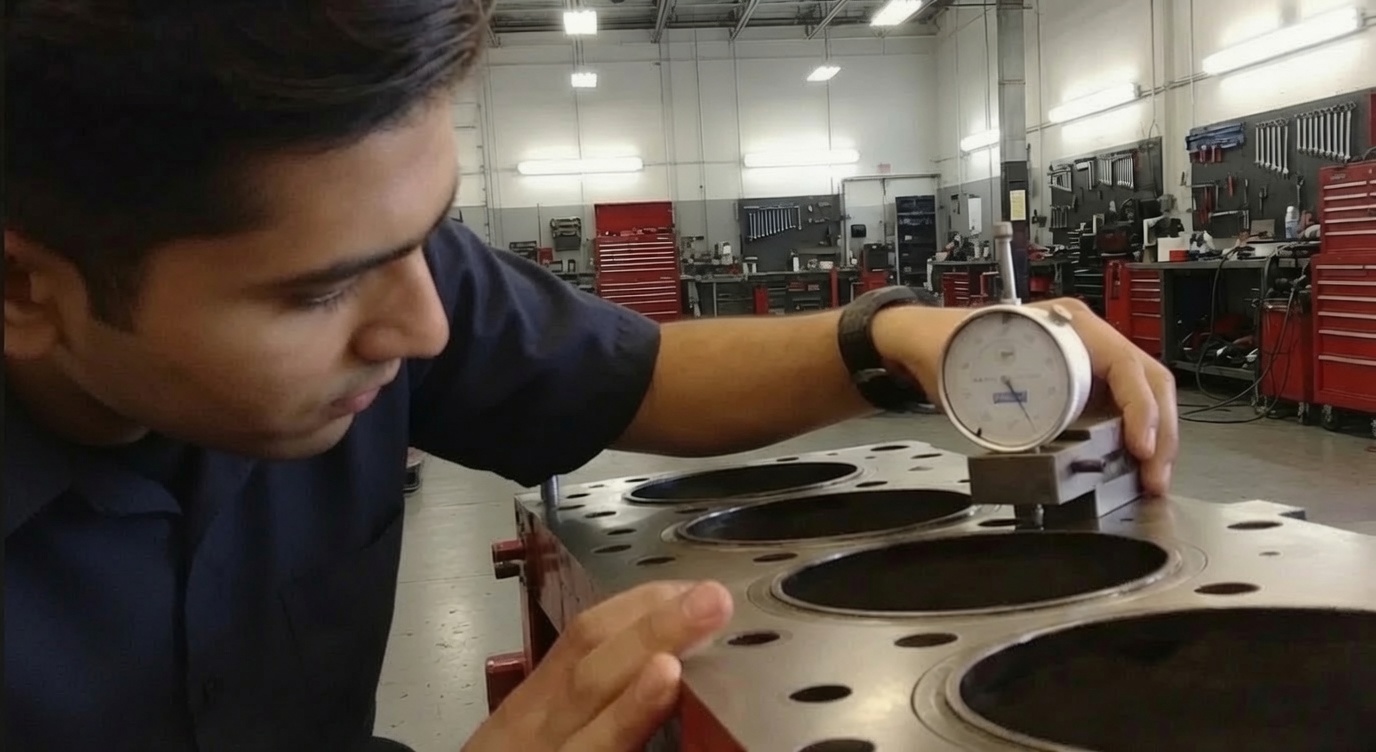
Measurements must be precise: Check 4–6 points per liner with a dial indicator or bridge micrometer. Specs vary (e.g., Cat 3406 often 0.001″–0.005″ with tight variation tolerances), and consistency cylinder-to-cylinder is as important as the absolute value. Shims, counterbore cutting, or specific liner heights adjust as needed.
How This Affects Your Rebuild Kit Purchase
Engine rebuild kits (in-frame or out-of-frame) typically include pistons, rings, bearings, gaskets, and often liners/seals. Buying the wrong configuration leads to compatibility issues:
- Protruding liner kits usually pair with specific head gaskets designed for that crush height, plus potential shims or hold-down components.
- Flush-style setups may use different gaskets, spacer plates, or no shims, and could require block machining if swapping types.
- Mismatches (e.g., installing protruding liners in a flush-optimized block or vice versa) can cause immediate sealing problems or long-term wear.
Real-world examples:
- In Caterpillar C15/3400 series or Cummins ISX engines, liner protrusion is a frequent culprit in post-rebuild failures. Kits must match bore sizes, shim needs, and protrusion specs.
- Wet liners (common in diesels) emphasize protrusion more than dry ones.
- Variations like raised-edge liners or different OD sizes further complicate choices.
Best Practices: Measure Before You Buy
- Inspect your engine: Measure existing liner protrusion, counterbore depth, and block condition before ordering.
- Consult your serial number/ESN/CPL: These dictate exact requirements.
- Work with experts: At FP Smith Parts, our team helps match kits to your specific engine configuration, including liner type.
- Consider upgrades: Some performance or longevity-focused rebuilds use slightly higher protrusion or upgraded liners (e.g., induction-hardened) for better sealing under high loads.
- Verify after install: Re-measure post-liner installation before final assembly.
Edge cases include worn counterbores (requiring machining/shims), mixed old/new liners (avoid—replace as a set for consistency), and high-performance applications that demand tighter tolerances.
Conclusion: The Right Kit Saves Time, Money, and Headaches
Knowing whether your engine requires flush or protruding cylinder liners isn’t optional—it’s foundational to a successful rebuild. Skipping this step risks incompatible parts, failed seals, and expensive comebacks. At FP Smith Parts, we stock high-quality, application-specific rebuild kits from trusted brands, with expert guidance to ensure you get exactly what your engine needs.
Browse our selection of Caterpillar, Cummins, and other heavy-duty overhaul kits today, or contact our parts specialists for personalized recommendations. Don’t just rebuild—rebuild it right the first time.
Need the Correct Engine Rebuild Kit?
Contact Us Today
(800) 558-7228
Press 1 for Sales | Local: (707) 864-1122
3190 Ramsey Road, Fairfield, CA 94534
FP Smith Parts: Quality Parts. Expert Support. Built for Reliability.