

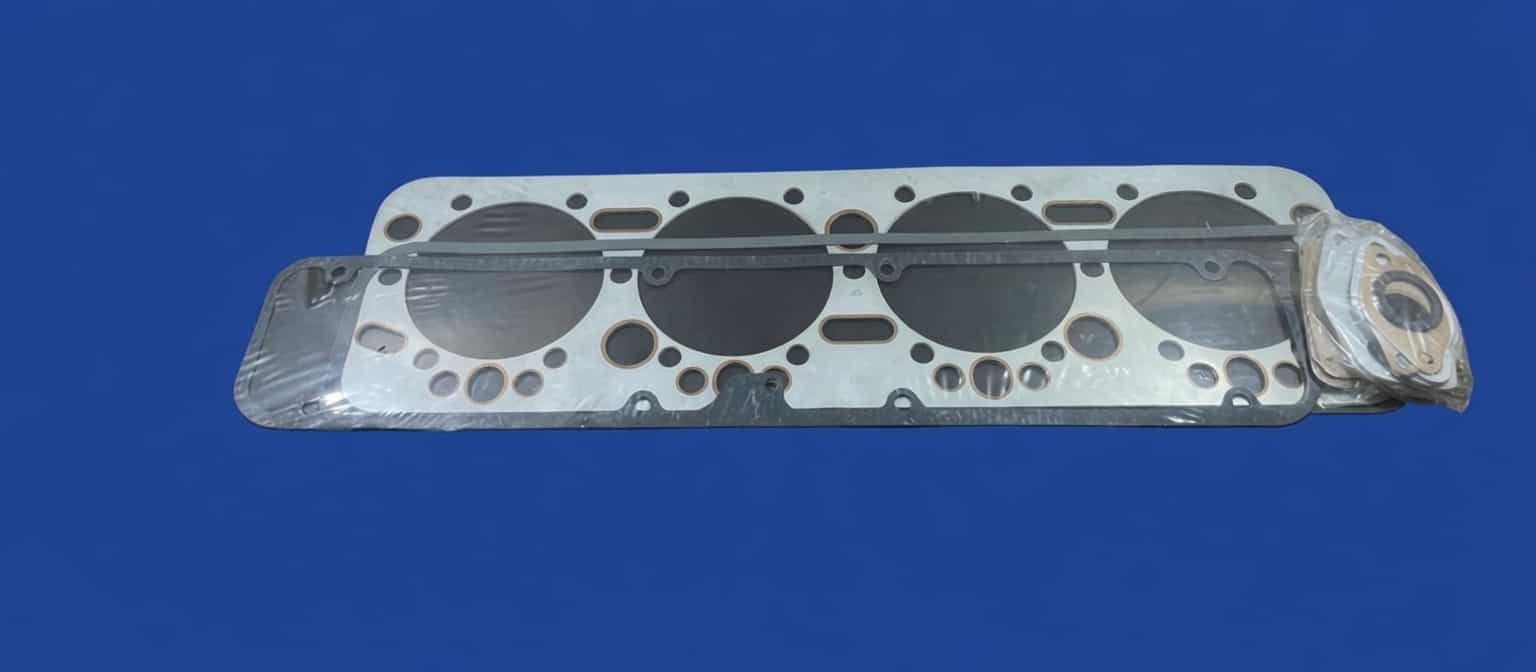
The casting number is the most reliable way to select the correct jet or non-jet head gasket for your TD-14 or TD-18 — get it right the first time.
At FPSmithParts.com, we specialize in hard-to-find parts for classic International Harvester (IH) crawler tractors like the TD-14 and TD-18 series. These rugged machines have powered countless construction, farming, and industrial projects for decades. However, one of the most common frustrations during engine rebuilds involves the cylinder head and head gasket selection—specifically distinguishing between “jet” and “non-jet” designs.
The casting number on the cylinder head is the most reliable way to identify which head gasket you need. Here’s a thorough explanation of why this matters, the engineering context, identification tips, and practical advice for your restoration or repair.
Background: IH TD-14 and TD-18 Engines and Cooling Challenges
The TD-14 (typically a 4-cylinder diesel, around 460-461 ci) and TD-18 (6-cylinder, around 691 ci) were workhorses built from the late 1930s through the 1950s, with variants like the TD-14A, TD-18A, and later 181/182 series.
These engines used a gasoline-start diesel system with complex cylinder heads incorporating dual valve sets (intake/exhaust for starting and running). Early designs had limited internal coolant passages, especially around the valves and combustion areas. On slopes or under heavy load, this led to hotspots, cracking heads—a notorious issue (“two kinds of TD-18s: those that cracked a head and those about to”).
IH responded with the “Jet Head” upgrade. These featured:
- Internal cooling jets directing coolant precisely at hot spots (valve areas).
- A side-mounted water manifold (often entering in multiple places, typically on the starter side) instead of front-entry from the water pump.
- Modified passages, plates over certain holes, and often a tapped hole for surge tank plumbing.
- Frequently paired with a surge tank on the hood for extra coolant capacity and better circulation.
Non-jet (standard/earlier) heads rely on simpler coolant flow and different gasket sealing requirements.
Why the Head Gasket Differs: Design and Sealing Implications
The jet and non-jet heads have fundamentally different coolant port layouts, water jacket configurations, and sealing needs around the cylinders, water passages, and fire rings (common on these engines for combustion sealing).
- Non-jet gaskets match the original front-entry cooling and standard porting.
- Jet head gaskets (e.g., 306 296 R1 for certain TD-14 142 applications) accommodate the side manifold entries, additional or relocated passages, and internal jet routing. Using the wrong one can lead to coolant leaks, overheating, poor sealing, or combustion gas intrusion.
Mismatched gaskets often fail to seal properly under the high compression and thermal stresses these diesels endure. Fire rings (copper or iron) around each cylinder add another layer—proper crush and protrusion must align with the gasket thickness.
Casting numbers provide definitive identification because:
- Part numbers on heads can be hard to read or match service replacements.
- Visual differences (manifold holes, plates) are subtle until the head is off.
- Serial numbers or model variants (TD-14 vs. 141/142, TD-18 vs. 181/182) don’t always correlate perfectly with head updates—field service bulletins allowed conversions.
Examples:
- Jet head often associated with casting/part like 306 224 R11.
- Later jet heads on TD-18 182 series might use numbers like 316 306 R11 / 316 307 R11.
Always cross-reference your specific casting with parts catalogs or a specialist.
How to Check the Casting Number and Identify Your Head
- Locate the casting: Usually on the head’s top or side (may require cleaning dirt/oil). Look for numbers like those starting with 306..., 316..., or other IH-specific codes.
- Visual cues:
- Jet: Water manifold rail along the side (3+ entry points), plate(s) covering old front water pump outlet, possible extra tapped holes for surge tank, rectangular plates near injectors.
- Non-jet: Simpler front cooling entry, no side manifold.
- Supporting clues: Surge tank on hood, modified radiator plumbing, or service history mentioning updates.
- If unsure: Remove the valve cover or consult the head while it’s accessible. Contact us at FPSmithParts.com with photos and the casting number—we can help verify.
Practical Considerations and Edge Cases
- Interchangeability: Some heads swap between related models (e.g., certain TD-18/TD-20 jet heads), but gasket compatibility must match exactly. Non-matching heads on the same engine can cause cooling imbalances.
- Rebuild tips: Measure fire ring protrusion and gasket crush (typically 0.062″-0.067″ compressed). Anneal reusable rings if applicable. Consider upgrading to jet-style during a major overhaul for better reliability.
- Availability: Reproduction and NOS gaskets exist but vary by type. We stock or source correct ones for TD-14/TD-18—provide your casting number for the right match.
- Why it matters long-term: Correct sealing prevents downtime, overheating, and costly re-repairs. These tractors often work in demanding conditions where reliability counts.
- Related parts: Don’t forget matching water manifold gaskets, thermostat housings, and surge tank components when doing a jet head job.
Conclusion: Accuracy Saves Time and Money
The casting number isn’t just a detail—it’s the key to proper fitment in these nuanced IH engines. Skipping this step risks leaks, overheating, or failure in the field. At FPSmithParts.com, we understand these classics inside out and are here to help you get the exact jet or non-jet head gasket, along with other TD-14/TD-18 parts.
Share your casting number or project photos with us. Let’s keep your crawler running strong!
Need the Correct TD-14 or TD-18 Head Gasket?
Contact Us Today
(800) 558-7228
Press 1 for Sales | Local: (707) 864-1122
3190 Ramsey Road, Fairfield, CA 94534
Email: [email protected]
Questions? Call or email our parts specialists. We’re passionate about getting these machines back to work. Stay tuned for more technical guides on IH crawlers. Happy wrenching!