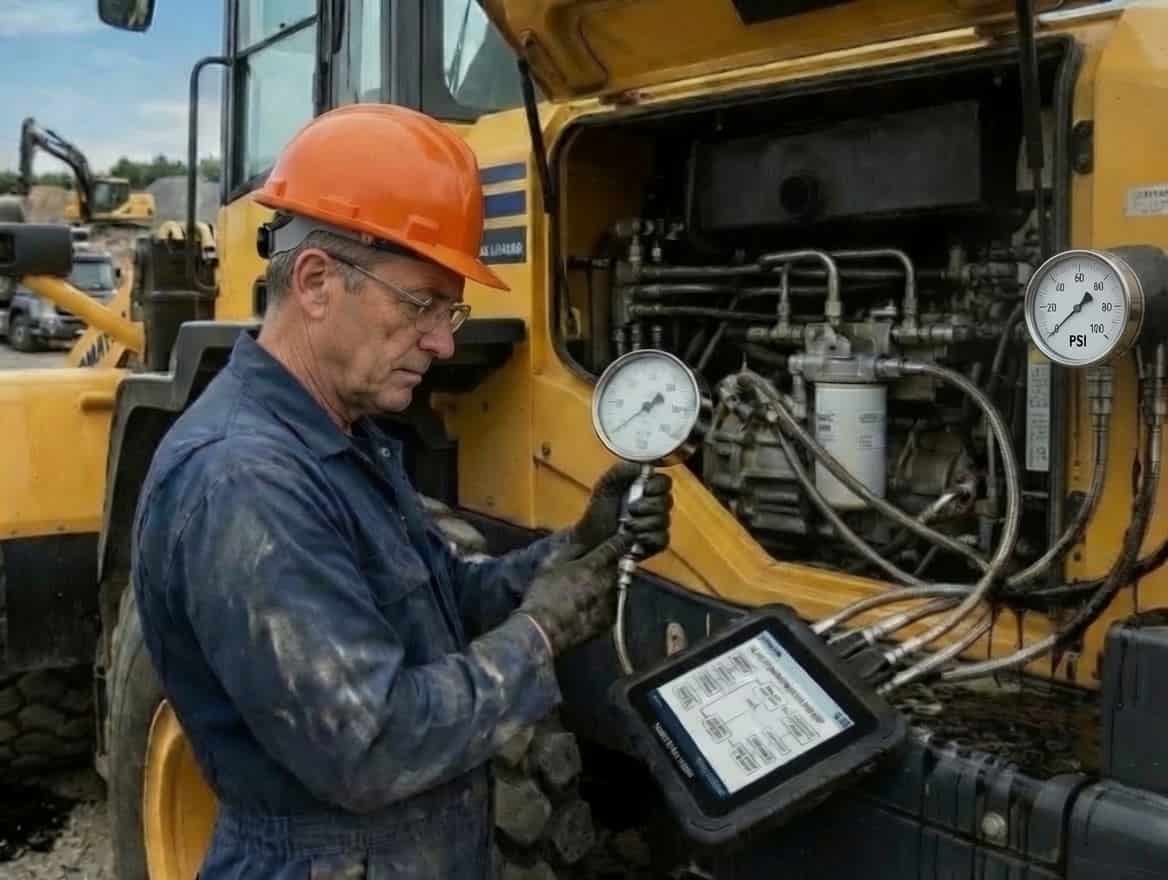
Pressure checks provide objective data that pinpoints the real problem — saving time, money, and unnecessary part replacements.
In the world of heavy equipment—whether you’re operating a Komatsu excavator on a construction site, a Caterpillar loader in a quarry, a John Deere tractor in the field, or any number of vintage and modern machines—downtime is expensive. When a machine starts losing power, exhibiting weak hydraulics, overheating, or acting erratically, the temptation is strong to start “throwing parts at it.” New pumps, valves, hoses, filters, or sensors seem like a quick fix. But this reactive approach often leads to wasted money, repeated failures, and prolonged frustration.
At FP Smith Parts & Equipment, with over 79 years of expertise stocking and supplying quality OEM surplus, used, and reconditioned parts for Komatsu, Caterpillar, Cummins, International Harvester, Dressta, and many more, we’ve seen this scenario play out countless times. The most effective (and cost-efficient) troubleshooting almost always begins with checking pressures on the machine before replacing components.
The Costly Cycle of the “Parts Cannon” Approach
Many operators and even some mechanics default to swapping parts because it’s straightforward and feels productive. A weak lift cylinder? Replace the seals or the whole cylinder. Low power? New fuel pump or injectors. Slow hydraulics? New hydraulic pump.
The problems with this method:
- High unnecessary costs: A single hydraulic pump or transmission component can run thousands of dollars. Replacing it without confirming the root cause often means the new part fails soon after—or the original issue persists.
- Wasted time: Shipping, installation, and testing new parts adds hours or days of downtime.
- Missed safety risks: Underlying issues like contaminated fluid, worn relief valves, or failing regulators can damage the entire system or create hazards.
- Repeated failures: Without diagnosis, you’re treating symptoms, not the disease.
We’ve helped customers who spent significantly on parts only to discover (after consulting us) that a simple pressure check revealed a clogged filter, incorrect relief valve setting, or a faulty gauge.
Why Pressure Checks Are the Smart Diagnostic Starting Point
Heavy equipment systems—hydraulic, fuel, engine oil, transmission, and air—rely on precise pressures to function. Measuring these provides objective data that points directly to the problem area. It’s non-invasive, relatively quick, and requires minimal disassembly compared to part swapping.
Key benefits:
- Pinpoints root causes: Low system pressure might indicate a worn pump, but it could also be a leaking relief valve, bypassed filter, aeration in the fluid, or even a faulty gauge.
- Saves money on parts: Confirm the pump is actually bad before buying a replacement. Many “bad pumps” are actually victims of upstream issues like cavitation from low reservoir levels or suction line restrictions.
- Extends component life: Early detection of abnormal pressures prevents cascading damage to expensive components like cylinders, motors, and valves.
- Improves safety and efficiency: Properly functioning systems reduce the risk of sudden failures on the job site.
- Informs better maintenance: Regular pressure checks establish baselines for your specific machine, helping you spot trends before breakdowns occur.
Consult Your Machine’s Service Manual: The Critical First Resource
One of the most important steps in any pressure-checking process is consulting the specific service manual for your machine. No two models are identical—even within the same brand (e.g., different Komatsu excavator series or Caterpillar loader variants have unique specifications, test ports, procedures, and safety requirements).
Why the service manual is essential:
- Model-specific pressure specifications: It provides exact target ranges for system relief pressure, pump flow, standby pressure, margin pressure, pilot pressure, and other values. Using generic numbers can lead to misdiagnosis.
- Correct test procedures and port locations: Manuals detail the exact sequence for testing (e.g., engine RPM, temperature, load conditions), which gauges or fittings to use, and where the diagnostic ports are located.
- Safety warnings and lockout procedures: High-pressure systems pose serious risks. The manual outlines proper depressurization, valve positioning, and precautions.
- Troubleshooting flowcharts and context: Many manuals include diagnostic trees that integrate pressure readings with other symptoms.
- Updates for modifications or later models: If your machine has been rebuilt or is a later revision, the manual may reflect important changes.
Attempting pressure checks without the manual increases the chance of error, voided warranties, or creating new problems. At FP Smith, we frequently reference these manuals when assisting customers and can help source hard-to-find technical literature for older or obsolete equipment.
Common Pressure Checks That Reveal Big Insights
While exact procedures vary by machine (as detailed in the service manual), here are high-level areas where pressure testing shines:
- Hydraulic System Pressure: Test main system relief pressure, pump output, and individual circuit pressures. Low pressure on one function but normal elsewhere often points to a specific valve or actuator issue rather than the main pump.
- Engine Oil Pressure: Critical for detecting bearing wear, oil pump problems, or restricted passages—especially important on high-hour Cummins, Caterpillar, or John Deere engines.
- Fuel System Pressure: Low fuel pressure can mimic injector or pump failure. Checking at the rail or before/after filters distinguishes between supply issues and component wear.
- Transmission and Torque Converter Pressures: Clutch pack pressures and converter outlet pressures help diagnose slipping, overheating, or shift problems without a full teardown.
- Air System Pressure (for brakes and accessories): Essential for safety on trucks, loaders, and scrapers.
Gauges, test kits with quick-connect fittings, and data loggers make this accessible. Many modern machines also have onboard diagnostics, but manual pressure verification remains the gold standard for confirmation.
Tools, Best Practices, and When to Call in Experts
- Invest in quality gauges and adapters matched to your equipment.
- Follow safety protocols: Relieve system pressure, use proper PPE, and never work alone on high-pressure systems.
- Document baselines during routine service.
- Combine with other diagnostics: Visual inspections, fluid analysis, temperature checks, and listening for unusual noises.
If you’re not equipped or comfortable performing pressure tests, that’s where FP Smith shines. Our team has decades of hands-on experience with hard-to-find and obsolete parts, plus deep knowledge of these systems. We can help source the right test equipment, guide you through common issues, or supply the genuine-quality parts you actually need once the diagnosis is clear.
Conclusion: Diagnose First, Replace Smartly
Throwing parts at problems might feel like progress, but checking pressures first—always guided by your machine’s service manual—is the professional, profitable way to maintain heavy equipment. It respects the complexity of these machines, protects your investment, and keeps your operation running efficiently.
At FP Smith Parts & Equipment, we’re more than just a parts supplier—we’re partners in keeping your machines productive. Whether you need Komatsu undercarriage, Caterpillar components, Cummins parts, or help troubleshooting a stubborn issue, our massive inventory and expertise are here for you.
Need Parts or Diagnostic Advice?
Contact Us Today
(800) 558-7228
Press 1 for Sales | Local: (707) 864-1122
3190 Ramsey Road, Fairfield, CA 94534
Same-day shipping on most orders placed before 3 PM. Let’s solve your equipment challenges the right way—starting with solid diagnostics.